
Solar Detailed Project Report
(DPR) Services in India
A Solar Detailed Project Report (DPR) is a structured technical and financial document used to evaluate, plan and support the development of a solar power project. Solyug Energy prepares project-specific solar DPRs for rooftop, commercial and industrial (C&I), ground-mounted and utility-scale solar projects. Our solar DPR approach combines site and project information with engineering design, solar resource assessment, energy-yield analysis, cost estimation, financial feasibility and project implementation planning. The objective is to give project owners, developers, EPC companies and investors a clear technical and commercial basis for moving forward with a solar project.
Bankable & Lender-Grade Engineering: Every DPR prepared by Solyug Energy includes certified PVsyst P90/P95 energy generation modeling, 3D shadow loss assessment, structural validation under IS 875 (Part 3), CEIG electrical compliance, and comprehensive 25-year financial cash flow modeling (IRR, NPV, DSCR, LCOE) accepted by premier Indian lenders and financial institutions.
What Is Included in Our Solar DPR?
Our DPR scope is tailored to project size, technology, site conditions and the intended use of the report. Typical sections include the following:
Project Overview and Objectives
The report begins with the project location, proposed capacity, project purpose, ownership/development model, proposed technology, target consumers or offtake arrangement and key project assumptions.
Site and Land Feasibility Assessment
We review available site information such as location, usable area, access, terrain, shading, orientation, roof or land constraints and other project-specific conditions. Where applicable, survey, topographical, or geotechnical inputs are incorporated.
Solar Resource and Energy Yield Assessment
Solar resource assumptions are evaluated for the project location and incorporated into energy-yield modelling. Where PVsyst is part of agreed scope, the model evaluates system configuration, losses and expected generation.
Solar PV System Design & Technology Selection
Module technology, DC capacity, AC capacity, DC-to-AC ratio, inverter selection, string configuration, mounting concept, tilt/orientation, equipment assumptions and system architecture.
Electrical Design and Grid Connectivity
Proposed electrical architecture, voltage levels, transformer requirements, cable and protection philosophy, metering, monitoring, single-line diagram requirements and grid-evacuation concept.
Structural and Civil Engineering Considerations
Rooftop & ground-mounted structural considerations: mounting arrangement, foundation concept, wind-load considerations, equipment foundations, access roads, drainage and infrastructure.

Solar Engineering Diagram & Site Layout
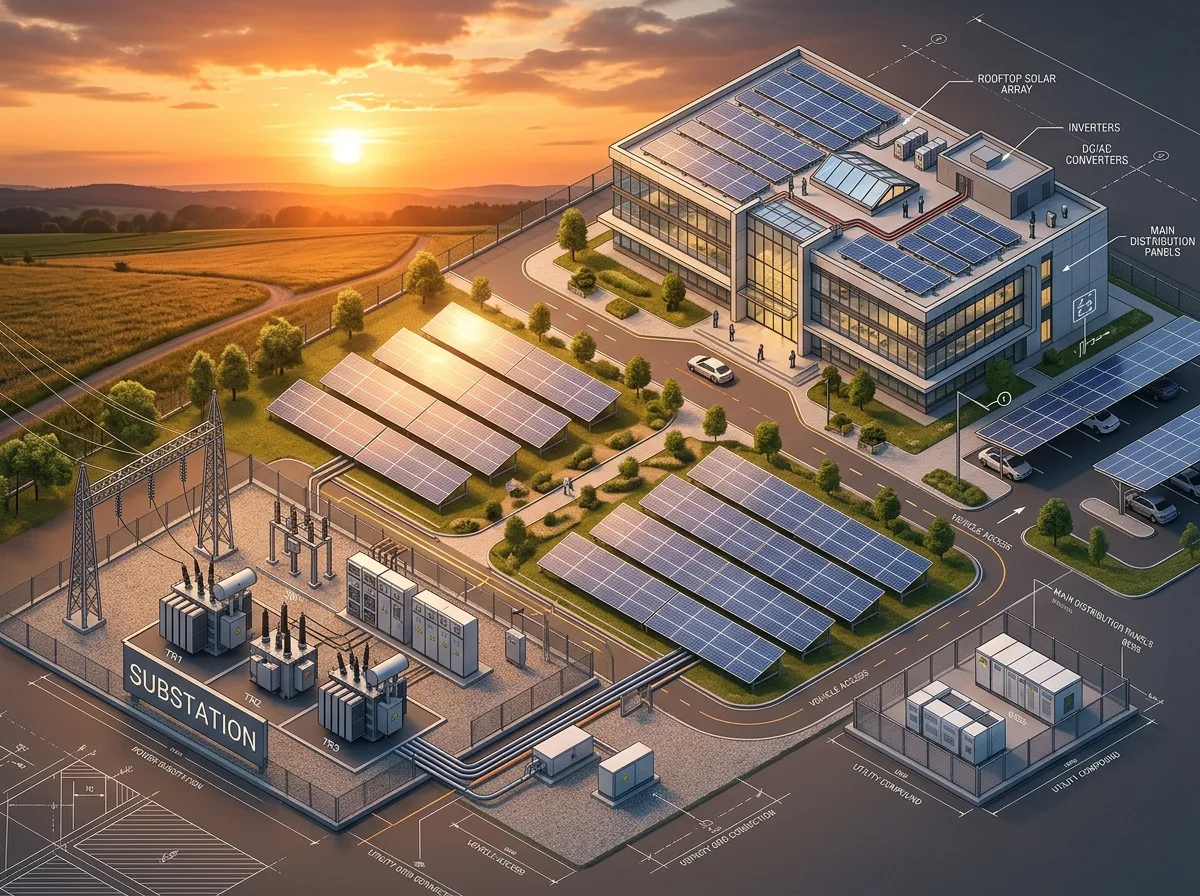
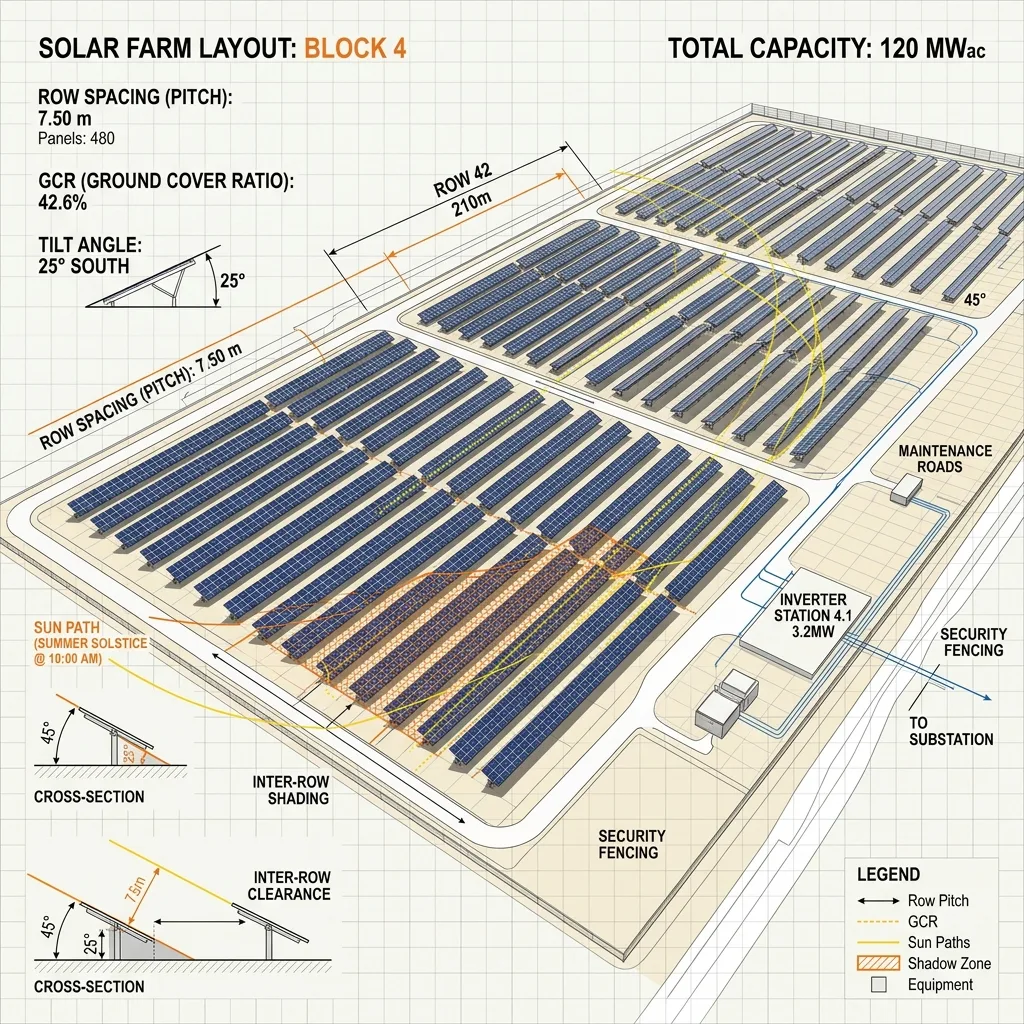
Includes CAD 3D layout renderings, single-line diagrams (SLD), shading heatmaps, and grid interconnection schematics.
BOQ, CAPEX and OPEX Estimation
A project cost section identifying major equipment and works: modules, inverters, structures, cabling, transformers, civil works, commissioning, O&M, spares, and insurance.
Financial Feasibility, ROI & Payback Analysis
CAPEX, OPEX, electricity savings, tariff assumptions, degradation, financing, payback period, IRR, NPV, DSCR and sensitivity scenarios.
* Financial outputs are modelled outcomes dependent on actual project costs, tariff, generation, financing, operation and market assumptions.
Regulatory and Approval Considerations
Identifies state-specific electrical, grid, land, construction, metering permissions, and DISCOM / CEI / Chief Electrical Inspectorate rules.
Project Implementation Schedule & Risk Assessment
Indicative timeline covering procurement, civil works, installation, testing, grid synchronization, commissioning, and risk mitigation strategies.
What Is a
Solar DetailedProject Report (DPR)?
No Cont
No Cont
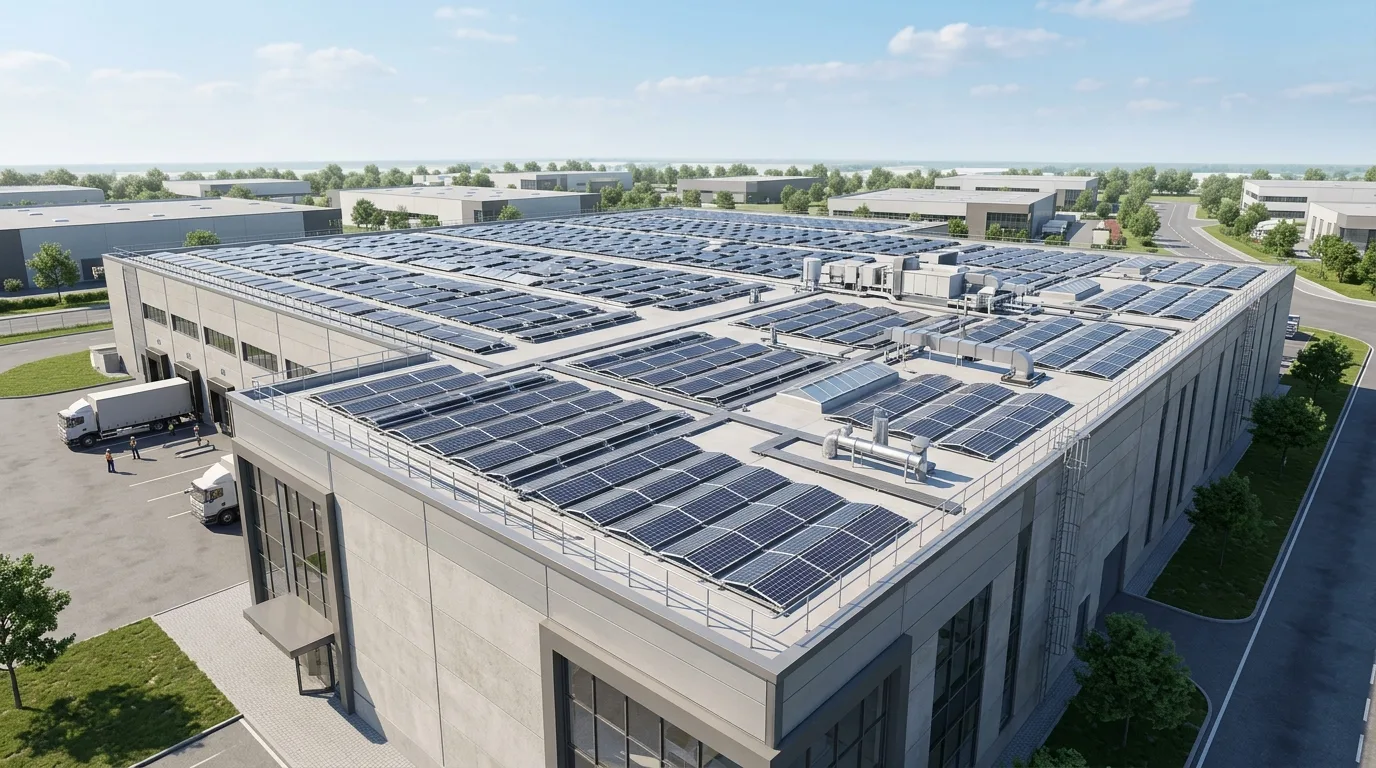
A solar DPR explains how a proposed solar PV project can be developed, what technical configuration is appropriate, what the project may cost, how much energy it can generate, what approvals or grid considerations may apply, and how the project can be implemented.
No Cont
Depending on project size and purpose, a DPR may bring together site information, solar resource data, system sizing, PVsyst or equivalent energy modelling, module and inverter selection, electrical and structural considerations, BOQ and cost estimates, financial analysis, implementation timelines and project risks.
No Cont
A DPR should be prepared around the actual project site and project objectives rather than copied from a generic template.
DPR for Rooftop, C&I and Ground-Mount Projects
DPR emphasis shifts by project type and audience:

Rooftop
DPRs here often support subsidy scheme applications and smaller-scale bank loans, with feasibility focused on roof condition, load capacity, and net metering economics.

C&I (Commercial & Industrial)
DPRs typically support larger financing arrangements or open-access/PPA structures, with more detailed CAPEX breakdowns and multi-year OPEX planning
Ground-Mount (Utility-Scale)
DPRs here are usually the core document in project finance due diligence — land feasibility, grid connectivity, structural design, and P90/P95 generation estimates all need to be represented at a level of detail smaller projects don't require.
Why Is a Solar DPR Important
Before Project Investment?
No Cont
No Cont
A well-prepared DPR reduces uncertainty before major project decisions are made. It helps stakeholders understand technical feasibility, expected energy generation, project costs, financial performance, grid requirements, implementation constraints and major risks.
No Cont
For developers and EPC companies, the DPR can act as a technical planning document. For project owners and investors, it can support investment evaluation and financial discussions. For larger projects, the report can also form part of the technical documentation required for tenders, financing or project approvals, subject to the specific requirements of the concerned authority, lender or scheme.
Our Solar DPR Preparation Process
Project Brief & Objective Definition
Collection & Validation of Site, Load, Land & Project Data
Site Feasibility & Design Assumptions
Solar Resource & Energy-Yield Modelling
Technical System Configuration
Electrical, Structural & Civil Inputs as Required
BOQ & Project Cost Estimation
Financial Feasibility & Sensitivity Analysis
Regulatory & Implementation Review
DPR Compilation, Technical QA & Final Submission
No Cont
No Cont
What Information Do We Need From the Client?
Typical inputs may include project location, available roof or land details, proposed capacity, electricity bills and load data for C&I projects, site photographs, survey drawings, land information, preferred technology or equipment requirements, grid-connection information, project timelines, financing assumptions and the intended use of the DPR.
Why Choose Solyug Energy for Solar DPR Services?
Solyug Energy focuses on solar design and project consultancy, supporting rooftop, C&I and large ground-mounted solar projects. Supported more than 520 MW of solar projects across India, Africa and Gulf countries. Our engineering capability connects technical feasibility with downstream design.

Request a Solar DPR Consultation
Planning a rooftop, C&I or ground-mounted solar project? Share your project location, proposed capacity, site details and project objective with Solyug Energy. Our team can review the available information and recommend the appropriate DPR scope, technical studies and financial analysis for your project.
