
STAAD Pro Wind Analysis
Report for Solar Structures
Solyug Energy performs STAAD Pro wind analysis for solar structures calculating wind loads per IS 875 (Part 3):2015 and validating that mounting structure design, member sizing, and foundations can safely withstand the wind conditions specific to the project's location. Every ground-mount and rooftop solar structure wind load analysis we deliver traces the full calculation chain from basic wind speed through to foundation uplift and overturning checks, not just a pass/fail summary.
Wind is frequently the governing structural load for solar mounting systems more critical than the static weight of the panels themselves because an array of tilted panels behaves aerodynamically like a series of low-rise canopy surfaces, generating significant uplift and lateral force under high wind conditions. Getting this analysis wrong doesn't show up until a storm event, which is precisely why it needs to be right the first time.
Wind Load Analysis Methodology
Step-by-step breakdown of how basic wind speed is converted into structural design pressure under IS 875 (Part 3):2015.
Basic Wind Speed (Vb)
India is divided into wind zones under IS 875 (Part 3):2015, with basic wind speed (a 3-second gust at 10m height, in open terrain, for a 50-year return period) ranging from around 33 m/s in interior peninsular regions to 55 m/s or higher along cyclone-exposed coastal stretches. We identify the correct basic wind speed for the project's exact location as the starting point for every calculation.
Design Wind Speed (Vz)
Basic wind speed is adjusted for site-specific conditions using four factors:
| Factor | Name | Description |
|---|---|---|
| k1 | Risk / probability coefficient | Design life and safety class of the structure (higher for critical / long-life installations). |
| k2 | Terrain roughness & height factor | How terrain category (open land vs. city/industrial) and structure height affect wind exposure. |
| k3 | Topography factor | Wind speed-up over hills, ridges, or escarpments at the specific site. |
| k4 | Importance factor for cyclonic region | Increases design speed for structures in cyclone-prone areas to ensure reliability. |
Design Wind Pressure (Pz)
Design wind speed is converted into static wind pressure per unit area:
Net Pressure Coefficient (Cpe – Cpi)
Wind acts on solar structures simultaneously from the outside (external pressure Cpe) and inside/underside (internal pressure Cpi). The net pressure coefficient determines the actual force on tilt legs, purlins, and rafters:
Produces maximum upward suction — critical for anchor bolt & ballast sizing.
Produces maximum downward push — critical for member bending & column capacity.
Why Wind Load Analysis
is Mandatory for Solar Structures
No Cont
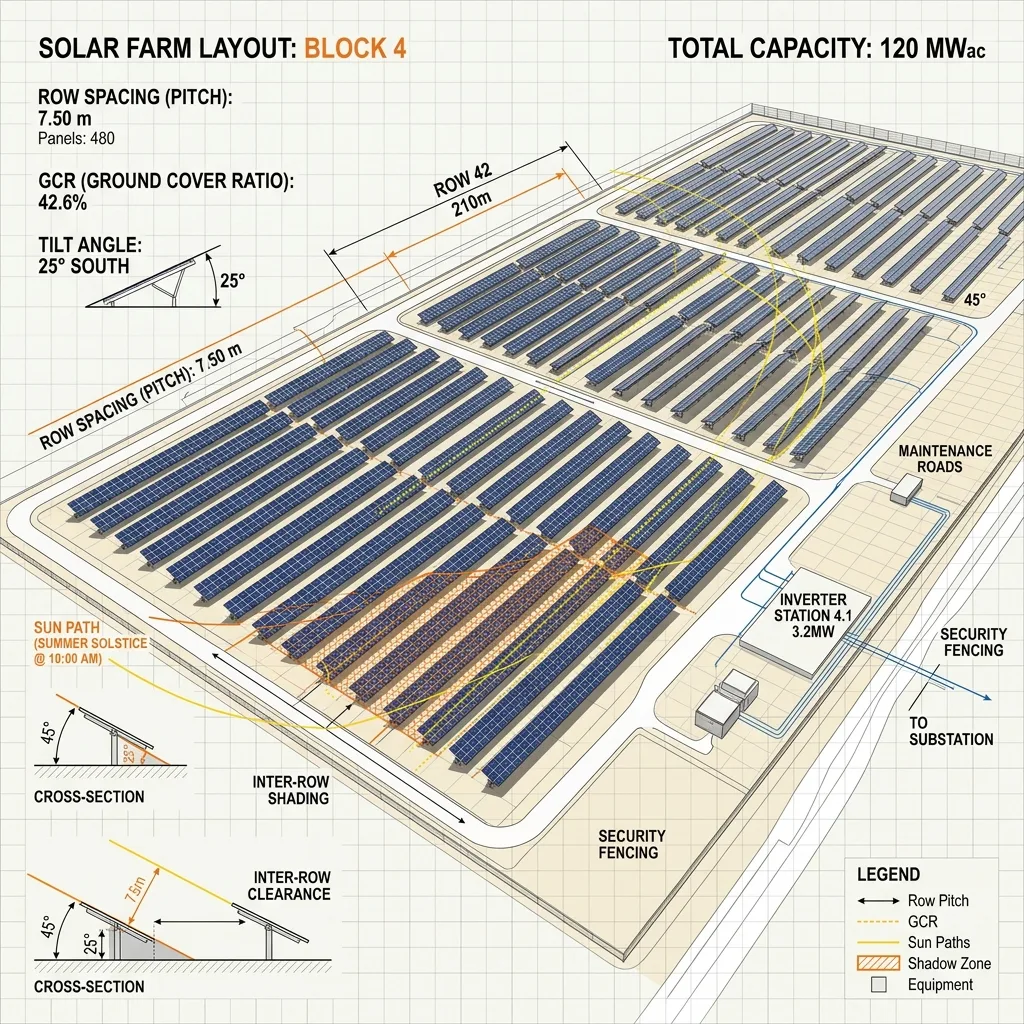
Solar mounting structures
whether rooftop racking or ground-mount fixed-tilt and tracker systems — are lightweight, large-surface-area structures that catch wind load disproportionately to their weight. Structural failure under wind, when it happens, is almost always traceable to underestimated wind pressure, undersized structural members, or foundations that weren't checked for uplift and overturning specifically, rather than a single dramatic design flaw.

In India, wind load design for any building or structure
including solar mounting systems is governed by IS 875 (Part 3):2015, the Indian Standard covering wind loads. Compliance isn't optional documentation; it's the basis lenders, insurers, and structural certifying authorities use to judge whether a mounting structure design is actually safe for its site.
Structural Report Deliverables
Every STAAD Pro structural wind analysis includes comprehensive engineering documentation, traceable calculation chains, and statutory compliance certifications.
Wind Load Calculation
A fully documented wind load calculation showing basic wind speed, all four k-factors with their basis (risk class, terrain category, topography, cyclonic zone status), the resulting design wind speed and pressure, and the pressure/suction coefficients applied the complete traceable chain from IS 875 input to final design load.
Structural Member Sizing
Using the calculated wind loads as input, STAAD Pro analysis validates or sizes the structural members purlins, rafters, columns, and bracing of the mounting structure, checking that each member stays within safe stress and deflection limits under the governing load combination (which frequently includes wind uplift as the critical case, not just downforce or dead load).

Foundation Uplift & Overturning Check
Wind-induced uplift and overturning moments are checked against the foundation's resisting capacity whether driven pile, screw pile, ballasted, or concrete footing confirming the foundation design (from the project's structural and civil drawings) is adequate for the calculated wind loads at that specific site, not just a generic assumption carried over from another project.
Certified Structural Stability Report
A complete, signed structural stability report documenting the full calculation chain, STAAD Pro model outputs, and member/foundation adequacy checks suitable for submission alongside CEI/CEIG electrical approval documentation, lender due diligence, or internal engineering sign-off.